Engineered vs Solid Hardwood: Which Suits Your Toronto Home?
Engineered or solid hardwood in Toronto? Over concrete, go engineered. Installed, solid runs $9-$18 per sq ft and engineered $8-$16.
If the floor goes over concrete, as in a condo or a basement, engineered hardwood is the one that works, once a moisture test shows the slab is dry enough. Over a wood subfloor in a house, both work: solid hardwood gives you more refinishes over its life, and engineered hardwood moves less through a Toronto winter. Installed, we price solid hardwood at $9 to $18 per square foot and engineered hardwood at $8 to $16.
Key takeaways
- Concrete underneath means engineered hardwood, after the slab passes a moisture test. Solid hardwood is nailed down, and it does not belong on a slab or below grade.
- Engineered hardwood shrinks and swells less when the furnace dries the air in winter, so it shows fewer gaps.
- Solid hardwood can be sanded and refinished several times. Engineered hardwood depends on how thick its top layer is.
- The two cost about the same once installed. The subfloor and the room decide more of the price than the type of wood.
What is the difference between engineered and solid hardwood?
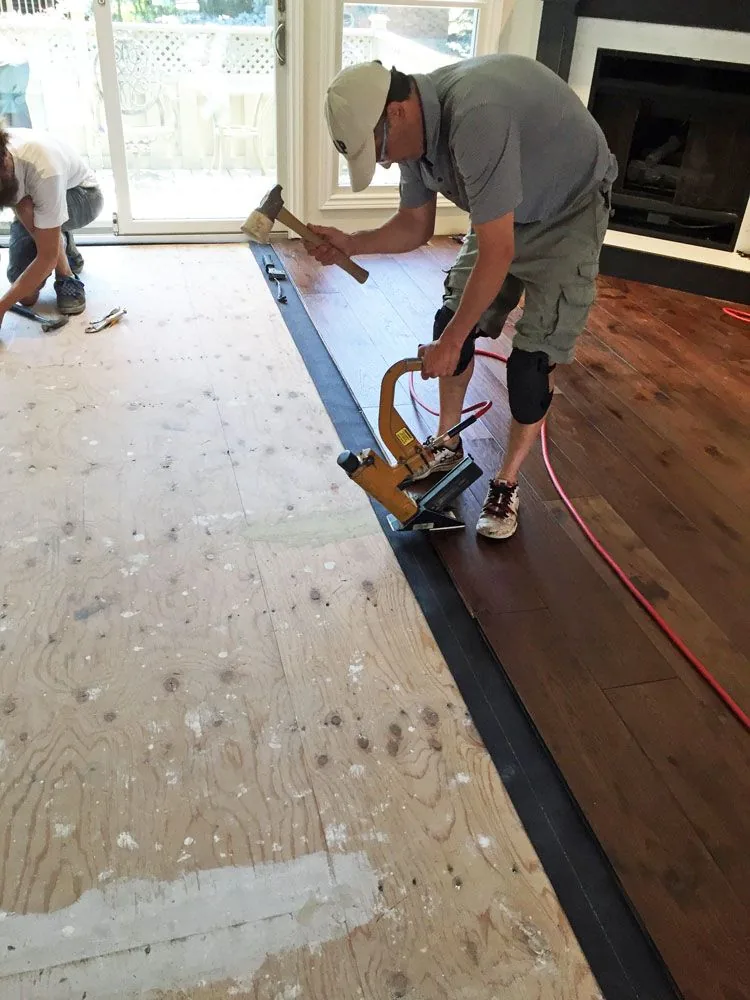
Solid hardwood is one piece of wood, usually three quarters of an inch thick, milled with a tongue and groove and nailed to a wood subfloor.
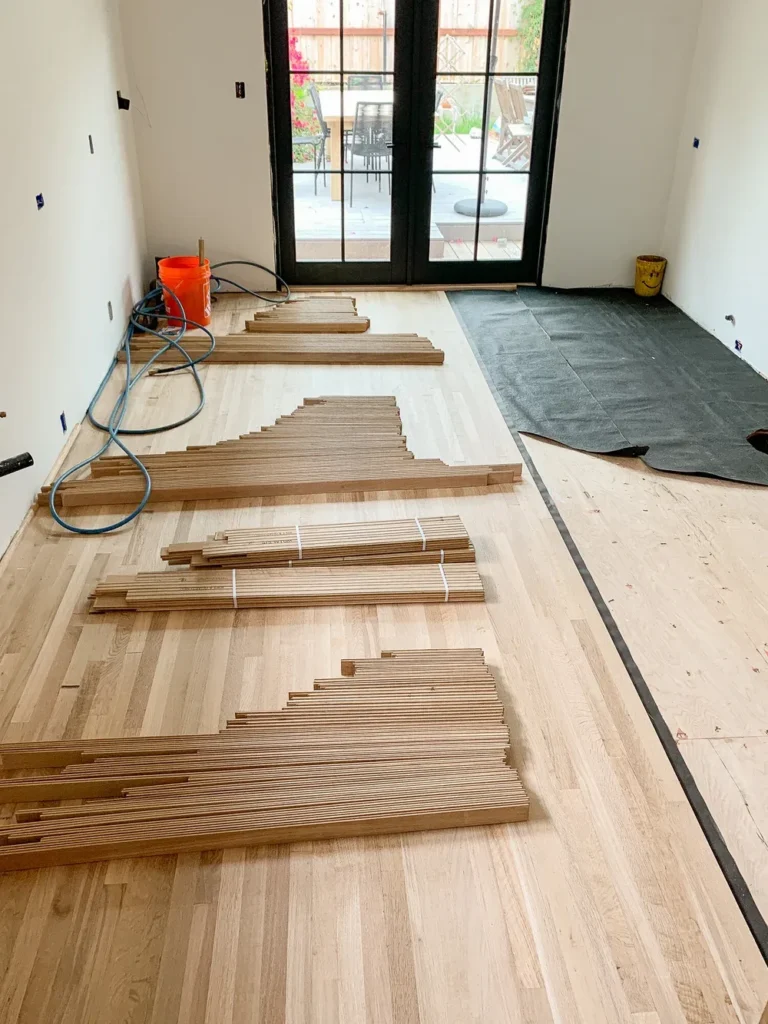
Engineered hardwood has a real hardwood top layer, called the wear layer, bonded to a core of cross-laminated plywood or high-density fibreboard. The wear layer is usually 2 to 6 millimetres thick. Because the layers of the core run in different directions, the board resists swelling and shrinking far better than one solid piece.
Once installed, the two look the same from standing height. The top surface of both is real oak, maple or walnut. The difference is underneath, and that is what decides where each one can go.
Which costs more in Toronto?
They land close together. We list solid hardwood at $9 to $18 per square foot supplied and installed, and engineered hardwood at $8 to $16. For a 1,000 square foot main floor, that is $9,000 to $18,000 in solid hardwood or $8,000 to $16,000 in engineered, and the labour takes 3 to 5 days.
What moves the number most is not the type of wood but what sits under it. A subfloor that needs repair, a slab that needs levelling, old flooring that has to come out, and stairs or transitions all add to either one. A narrow, premium species in solid wood sits at the top of the range, and a thin-wear-layer engineered plank sits at the bottom.
Can engineered hardwood go in a Toronto condo or basement?
Yes, as long as the slab is dry enough, and in most cases it is the only real hardwood that can. Condos and basements sit on concrete. Solid hardwood needs a wood subfloor it can be nailed into, and a slab gives off moisture that a solid board will soak up and cup on.
Engineered hardwood is glued to the slab or floated over an underlay. Before anything is glued down, we test the slab: moisture probes go into the concrete and stay for at least 24 hours, and the reading tells us whether the slab is dry enough for the product you have picked, or whether the room needs a different floor.
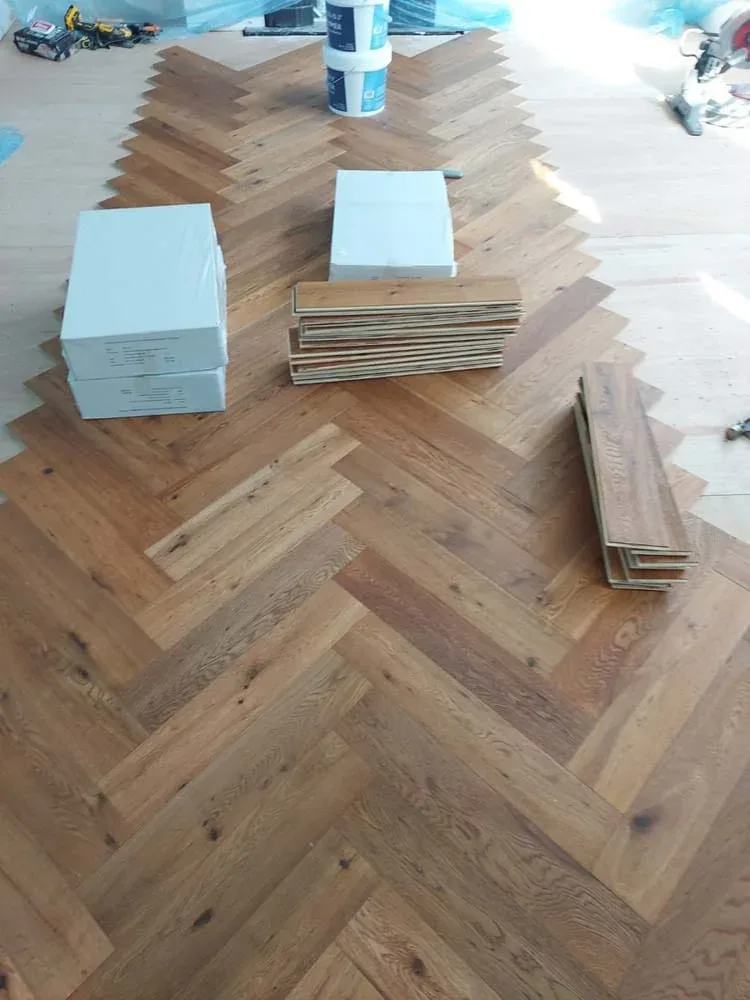
In a condo, the board also has a say. Your corporation’s own rules, not the Ontario Building Code, set the sound rating the floor has to meet, and most boards want product data sheets and an underlay specification before they approve the job. Approval usually takes 1 to 4 weeks, and a one or two bedroom unit is then installed in 1 to 3 days. In a condo, we price engineered hardwood at $10 to $18 per square foot, because the acoustic underlay, any slab levelling and building access add to the job. You can see how we plan these jobs on our engineered hardwood flooring page.
Which handles Toronto’s winters better?
Engineered hardwood. Wood floors are happiest at 30 to 50 percent relative humidity. A Toronto house with the furnace running can drop well below that from December to March, and then the summer turns humid.
Solid boards shrink across their width as the air dries, which opens gaps between them in winter. Wide solid planks show this more than narrow strip, because each board has more width to lose. The gaps usually close again in spring, but they are what most people notice first.
Engineered boards move much less, because the cross-laminated core holds them stable. If you want wide planks, or you do not want to run a humidifier all winter, engineered hardwood is the easier floor to live with.
Either way, the wood needs to sit in your home before it goes down. We install once its moisture content is within 4 percent of the subfloor for strip flooring and within 2 percent for wider plank.
How many times can each one be refinished?
Solid hardwood has wood to spare. A standard three-quarter-inch board can take several full sandings over its life, which is why so many older Toronto houses still have their original oak.

Engineered hardwood can only be sanded as far as its wear layer allows. A thin layer, around 2 millimetres, may only take a light sand or a screen and recoat. A thicker layer, 4 millimetres or more, can usually be fully sanded once or twice. If you plan to keep the floor for decades, check the wear layer thickness before you buy, and make sure it is written on your quote.
Which one should you choose for an older house?
In an older Toronto house with a wood subfloor, solid hardwood is usually the natural fit. It nails into the existing deck, it can be matched to original oak in other rooms, and it can be refinished for decades.
Before either one goes down, the subfloor gets checked. Many older houses have board subfloors that need refastening, and the joist spacing decides how thick the deck has to be for the nails to hold. That check matters more to how the floor performs than the choice between solid and engineered.
Pick engineered hardwood if the room is over concrete, if you want wide planks without winter gaps, or if a slightly lower price matters more than the number of future refinishes.
Frequently asked questions
Is engineered hardwood waterproof?
No. The top layer is real wood and will stain or swell if water sits on it. For a bathroom, laundry room or a basement that has had water, vinyl plank or tile is the safer floor.
Can engineered hardwood be nailed down like solid hardwood?
Yes, thicker engineered boards can be nailed to a wood subfloor in a house. That gives you the stability of engineered with the solid feel of a nailed floor.
Does engineered hardwood look cheaper than solid?
Not once it is installed. The surface is real wood in the same species and finishes, so the difference is in the core you never see.
Getting the right floor for your room
Toronto Flooring Co checks the subfloor or tests the slab first, then recommends the hardwood that suits the room, and puts the wear layer, the prep and the price in a written quote. Tell us about your room and request a free measure, and we will send the written quote within one business day.