Written quote within one business day, across Toronto and the GTA
$150-$600 per board Moisture source found first Blended, not patched Toronto and the GTA

Hardwood floor repair in Toronto

A repair is judged on whether you can see it afterwards, so Toronto Flooring Co finds where the moisture came from, then plans the cut line around a doorway instead of leaving a rectangle in the middle of your floor.

Moisture source diagnosed before any board comes out
Replacement boards blended along a natural break in the floor
Colour matched against a floor that has already aged under light
Repair priced against the cost of refinishing the room

Send us the damage

A photo, the approximate size of the affected area, and whether anything leaked nearby.

What can we help with?

So the right crew reviews your project.

Any workmanship warranty is set out in your written quote, job by job.

The part that is hard

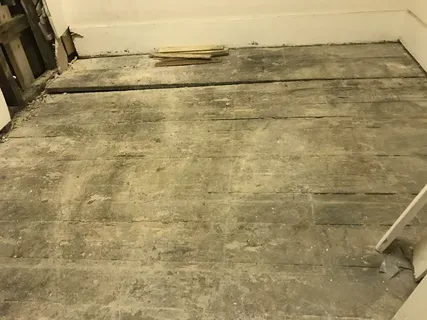
Aged hardwood makes a new board obvious

Cutting a damaged board out and fitting a new one is a craft problem with a known answer. Making the new board disappear is the part that takes judgement, because the floor around it has spent years changing colour. Light does most of it. Red oak ambers, white oak warms, and the boards under a rug or a sofa have aged at a different rate from the boards beside the window. A brand new board of the same species from the same mill, stained with the same can, will read lighter than the floor it sits in. So we match to the aged floor rather than to the original specification: sample the tone in the area we are repairing, mix to that, and where the difference cannot be closed we say so before the board comes out rather than after it goes in.
What a repair visit covers

Where the water came from

A cupped or blackened board is a symptom. We look for the source first: a dishwasher line, a fridge feed, a radiator valve, a failed window sill or damp arriving from a crawlspace. Repairing the wood without closing the source means doing the repair twice.

A cut line you will not notice

A rectangular patch in the middle of a room announces itself no matter how well the colour matches, because the eye follows board ends. We plan the repair boundary to land at a doorway, a threshold or a change of direction, so the break reads as part of the floor.

Tone matched on site

Stain is mixed against the floor as it is today, tested on an offcut, then checked in the light the room gets rather than under a work lamp. Where the species is no longer easy to source, we say that at the quote rather than substituting quietly.

Hardwood repair pricing in Toronto

Toronto ranges collected September 2026. The two per square foot figures below describe different scopes rather than different contractors, so read both before comparing quotes.

Within a refinish

$8-$15 / sq ft

  • Boards replaced while the room is being sanded anyway
  • The new wood is sanded flat with the old in the same pass
  • Sand and three coats across the room $3.50-$9 per sq ft
  • The cheapest way to buy a repair if the room was due a refinish
Combine with a refinish

Isolated spot repair

$20-$40+ / sq ft

  • A repair with no refinish around it
  • Blending the new finish into the existing coating on site
  • Higher rate because the hard part is the match, not the wood
  • Subfloor repair underneath $1-$4 per sq ft where needed
Price a spot repair
Our Process

How a repair runs

1

Diagnose the cause

Moisture readings on the damaged boards and the boards around them, then a look for the source. Repairing wood while water is still arriving produces the same damage again within a year.

2

Plan the boundary

We decide where the repair stops. A doorway, a threshold or a change of board direction hides a break. A line drawn across open floor does not, regardless of how good the colour match is.

3

Cut, replace, fasten

Damaged boards cut out, the subfloor underneath checked and repaired where it has softened, then new boards fitted and fastened into sound decking rather than into damp material.

4

Match and blend

Stain mixed against the aged floor, tested on an offcut, then the finish blended into the surrounding coating and checked in the room's own daylight.

What we say before we lift a board

Three conversations happen at the quote on every repair, because all three change the price and one of them can change the whole plan.

Whether repairing is the right call at all

If the damage covers enough of a room, board replacement inside a refinish at $8 to $15 per square foot plus a sand and three coats at $3.50 to $9 can land close to the cost of a new floor at $9 to $18 per square foot installed. We do that arithmetic in front of you instead of selling the repair by default.

How close the match will get

We do not promise invisible. We tell you what the limiting factor is, which is usually that the existing floor has aged under light for years and a new board has not. A repair blended into a doorway with a good tone match reads as a floor. The same repair in the middle of a living room reads as a repair.

What is under the damaged area

Water that got through the finish generally got into the subfloor as well. We check the deck while it is open and price subfloor repair at $1 to $4 per square foot if the material has softened. Laying a new board onto a damp or spongy deck is how a second repair gets booked.

Cupped hardwood points at water from below

Find the source before touching the wood. That is the whole of the advice and it is the step most often skipped.

Cupping, where the edges of boards sit higher than their centres, means moisture arrived from underneath. The usual suspects in a Toronto house are an appliance line, a radiator valve, a dishwasher or fridge feed, a window sill that has been failing quietly, or damp coming up through a crawlspace. Staining and blackening at the board edges means water sat long enough to get into the wood rather than running off the finish.

What happens next is counterintuitive. Once the source is closed, the floor should be left alone and metered rather than repaired immediately. Wood that cupped because of moisture from below often flattens again as it dries, and the area that still needs replacing after drying is usually smaller than the stained area suggested on day one. Replacing boards into a deck that is still carrying water produces the same cupping in the new boards within a season.

The subfloor is the other half of it. Water that reached the finish floor reached the deck, and a softened deck will not hold a fastener. Subfloor repair runs $1 to $4 per square foot in Toronto and it is priced separately, because on some jobs it is the entire problem.

Dog claws reach the finish before the hardwood

Scratches are a finish problem until they are a wood problem, and the line between the two decides the price.

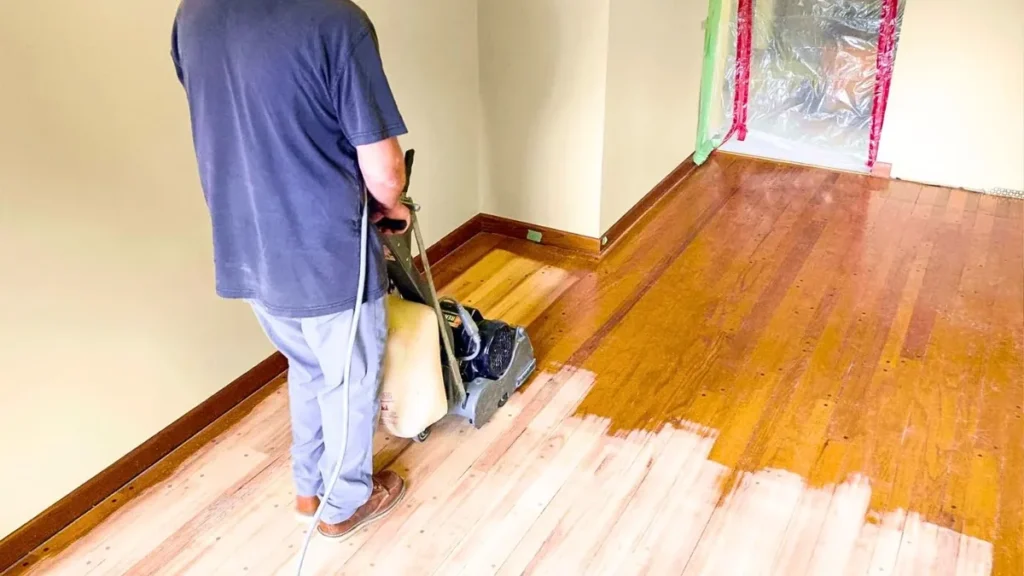
Dog claws mark the coating long before they mark the board. If the damage stops in the finish, the room can be sanded and recoated and the marks are gone, and a sand with three coats runs $3.50 to $9 per square foot in Toronto with the rate falling as the area grows. If the claws have cut into the wood itself, sanding has to go deep enough to remove the gouge, which is possible on a solid floor that has material left and not always possible on an engineered floor with a thin wear layer.

Urine is a different problem and a harder one. It penetrates into the board and often through to the subfloor, and it leaves a dark stain that sanding does not lift because the discolouration is not in the surface. Those boards get replaced, and the deck underneath gets checked and sealed or replaced too. Priced as board replacement, that is $150 to $600 per board.

Species matters going forward. Red oak is the Toronto default partly because it takes a beating and stains predictably. Walnut is beautiful and soft. If a household has large dogs, we say so before anyone falls in love with a sample rather than after the first repair.

A hardwood repair should end at a doorway

The eye reads board ends. Everything about how a repair looks follows from that.

A rectangular patch in the middle of a floor is the worst case, because it creates a closed shape of board ends with nothing in the room to explain it. Even a perfect colour match stays visible, because the pattern break is what gives it away rather than the tone. A repair whose boundary lands at a doorway, a threshold or a point where the board direction already changes reads as a normal feature of the floor.

This sometimes means replacing more wood than the damage strictly requires, and we will show you both versions of the price. Extending a repair from a four-foot damaged area out to a doorway six feet away costs more in boards and less in regret. Where the damage sits in the middle of a wide open room with no natural break anywhere near it, the honest recommendation is often to replace the boards and refinish the whole room, which puts you back in the $8 to $15 per square foot range plus the refinish rather than the $20 to $40 and up isolated repair rate.

That is the conversation we would rather have at the quote. A repair that costs less and shows for the next fifteen years is not the cheaper option.

Floor repair questions

How much does replacing one board cost?

Toronto sources put it between $150 and $600 per board, and the spread is real rather than sloppy. One source quotes $150 to $350 and up for the replacement itself. Another quotes $300 to $600 where stain matching is part of the work. Species, board width and how the board is fastened all move it, and a board in the middle of a field costs more than a board at the edge because getting the damaged one out without wrecking its neighbours is the slow part. Across a whole job, repair scopes in Toronto run $150 to $1,500 from a single spot to multiple rooms.

Why is your per square foot number different from the other quote?

Because there are two different per square foot rates for hardwood repair in Toronto and they measure different work. Board replacement carried out inside a refinish runs $8 to $15 per square foot, because the room is being sanded anyway and the new wood is flattened and coated in the same pass. Isolated spot repair with no refinish around it runs $20 to $40 and up, because the difficult part is blending new finish into an existing coating on site. If two quotes differ by that much, the first question is which of those two jobs each one priced.

My dishwasher leaked. Do I have to replace the whole floor?

Not usually, but the sequence matters more than the size. Close the source, then let the floor dry and meter it, then decide. Boards that cupped because moisture arrived from underneath often flatten out as they dry, and boards replaced while the deck is still wet will cup again. Once it is dry we can see how far the damage really travelled, which is normally less than the stain suggests. We also check the subfloor, because water that reached the wood reached the deck.

Will the repair be invisible?

That depends mostly on where it is, not how good the work is. The floor around your repair has aged under years of light, so a new board of the same species and stain starts out lighter. We mix to the aged tone rather than the original spec, which closes most of the gap. The rest is the cut line: a repair that ends at a doorway or a threshold disappears, and the same repair ending mid-room stays visible because the eye follows board ends. Where the honest answer is that it will show, we say so at the quote.

Send a photo and we will tell you what it is

Most repairs can be scoped from a picture and two questions. If it needs a visit and a moisture meter, we will say that instead of guessing.

Back to top