The expansion gap behind a baseboard
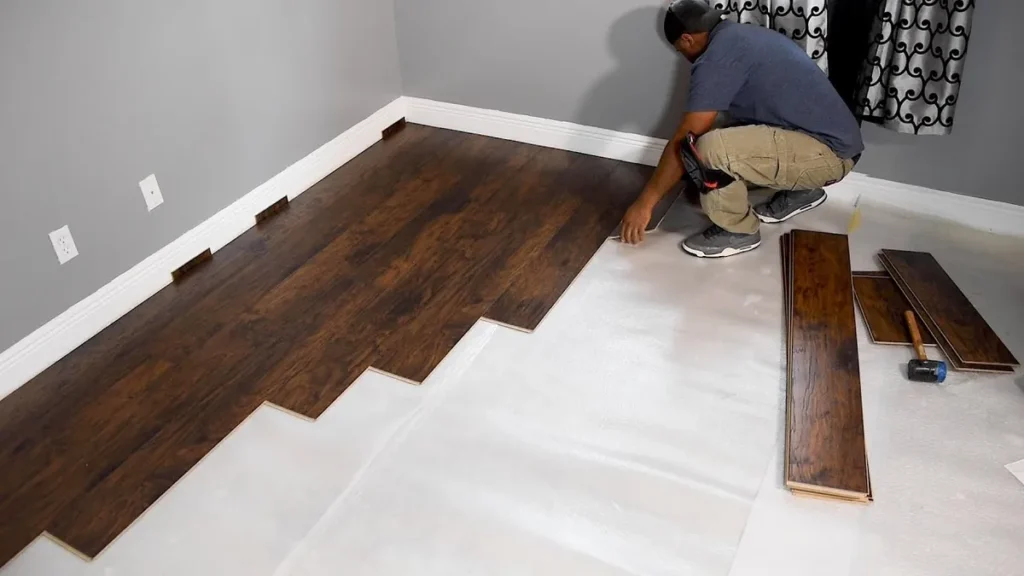
A floating floor has to be able to move. Laminate and click-lock vinyl are laid without fasteners and expand and contract as a single sheet, so an expansion gap is left around the entire perimeter and at every fixed obstacle. Wood does the same thing for its own reasons: it shrinks across the grain by several percent between damp and dry and barely at all along its length, so a room full of boards accumulates real movement at the walls. That gap has to stay open, and baseboard is what hides it. Fit the baseboard first and you either have to cut the floor tight to it, which pinches the floor, or scribe the floor around trim that was never meant to be a finished edge. Fit it after, and the gap is covered, the floor is free and the room looks intentional. That sequence is also why doing the floor and the trim as one project costs less than two visits.