Written quote within one business day, across Toronto and the GTA
$5-$11 per sq ft installed Waterproof core Slab tested before glue Basements and kitchens

Vinyl plank flooring installation in Toronto

Vinyl plank is the product that survives a basement, a kitchen and a laundry room, and Toronto Flooring Co installs it across Toronto and the GTA with the slab tested before anything is glued to it.

SPC and WPC cores explained before you pick one
In-situ slab humidity read against the resilient limit
Acoustic underlay specified as a full floor assembly
Levelling priced up front, because rigid plank shows every hollow

Get a vinyl plank quote

Rooms, rough square footage, and whether it is going over concrete or over plywood.

What can we help with?

So the right crew reviews your project.

Any workmanship warranty is set out in your written quote, job by job.

Luxury vinyl plank

No wood fibre in a vinyl plank core

Luxury vinyl plank is built in layers: a wear layer on top, a printed film that carries the wood or stone look, and a rigid core underneath that gives the plank its stiffness. The core is the part that matters for a Toronto basement. It contains no wood fibre and no paper, so standing water does not swell it, which is the difference between vinyl plank and laminate in a room where water is a realistic event. That is a property of the plank, not of the finished floor: seams, perimeters and what sits underneath still decide whether water that gets past the surface can be dried out. We install vinyl plank in basements, kitchens, laundry rooms and bathrooms, and we tell you where the water goes in each of those rooms rather than repeating the word waterproof and leaving it there.
What comes with a vinyl plank install

Slab read against the resilient limit

Resilient products carry their own moisture threshold. Under the ASTM F2170 in-situ test, resilient flooring generally tops out around seventy-five to eighty percent relative humidity, with the calcium chloride equivalent at three to five pounds. Manufacturer specs override those and we work to whichever is stricter.

Core chosen for the room

Stone plastic composite is denser, harder underfoot and more stable against heat. Wood plastic composite is lighter, softer and quieter. Neither is better in the abstract. A basement slab and a second-floor bedroom want different answers, and we say which and why.

Condo assembly documented, not assumed

Toronto boards want documentation for the whole floor assembly, not just the plank. An attached pad on the back of a board frequently fails to satisfy that, because the rating applies to everything between the concrete and your foot. We specify and document the full build-up.

Vinyl plank pricing in Toronto

Toronto and GTA ranges collected September 2026. Vinyl plank sits between laminate and engineered hardwood on price, and the substrate work is what usually moves a quote rather than the plank.

Labour only

$1.50-$4 / sq ft

  • You supply the plank
  • Floating click install at the lower end
  • Glue-down at the upper end
  • Levelling and removal priced separately
Price labour only

Condo with acoustic underlay

$6-$11 / sq ft

  • Acoustic underlay $0.80 to $3.50 per sq ft
  • Slab levelling $3 to $6 per sq ft where needed
  • Board approval commonly adds one to four weeks
  • Most one and two bedroom units install in one to three days
Ask about my building
Our Process

How a vinyl plank install runs

1

Read the substrate

Probes into the slab where there is one, moisture meter on a wood deck, and flatness checked across the room. Rigid plank telegraphs hollows, so the flatness reading is the number that drives the prep line on your quote.

2

Choose the core and the method

Stone plastic or wood plastic composite, floating or glued, and what goes underneath. In a condo that choice gets written up as an assembly for the board rather than as a product name.

3

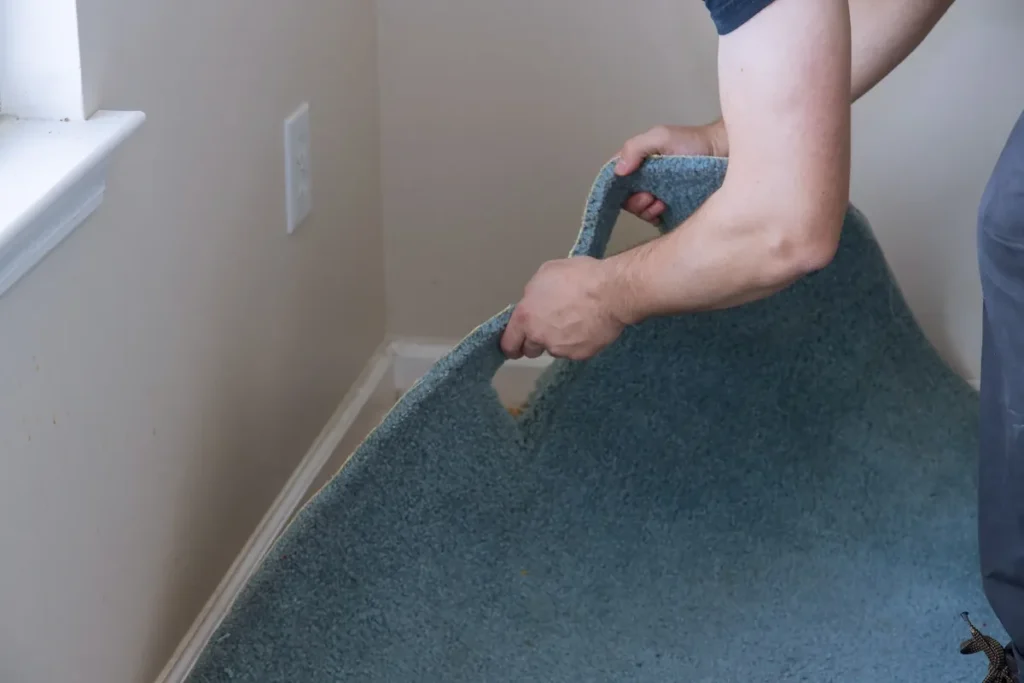
Strip and level

Old floor out and disposed of, high spots ground, low spots filled with self-levelling compound, and the perimeter marked so the expansion allowance is not lost to a tight cut at a doorway.

4

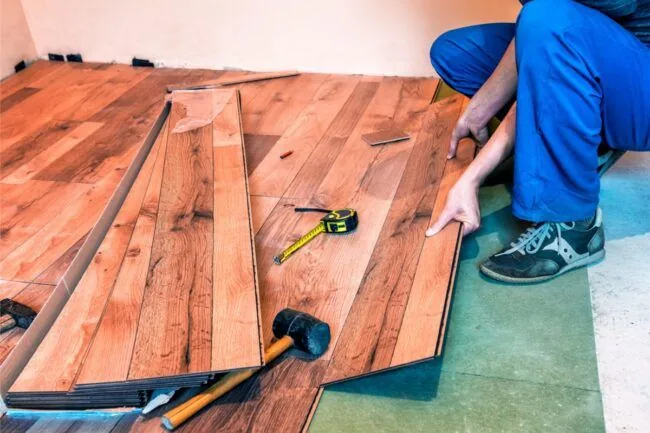
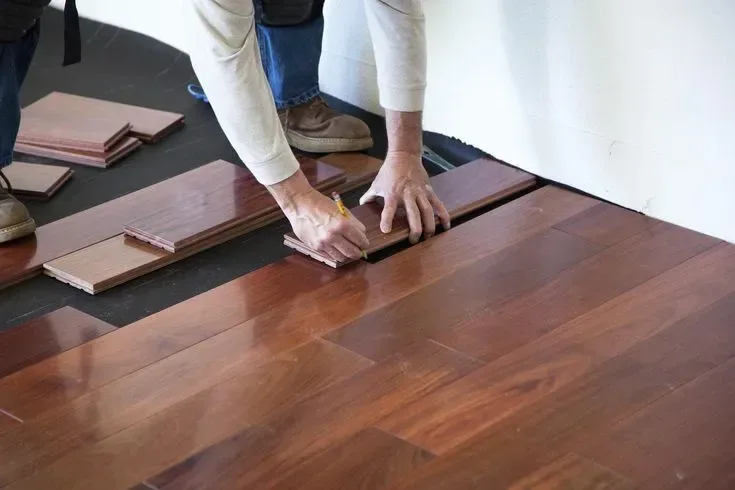
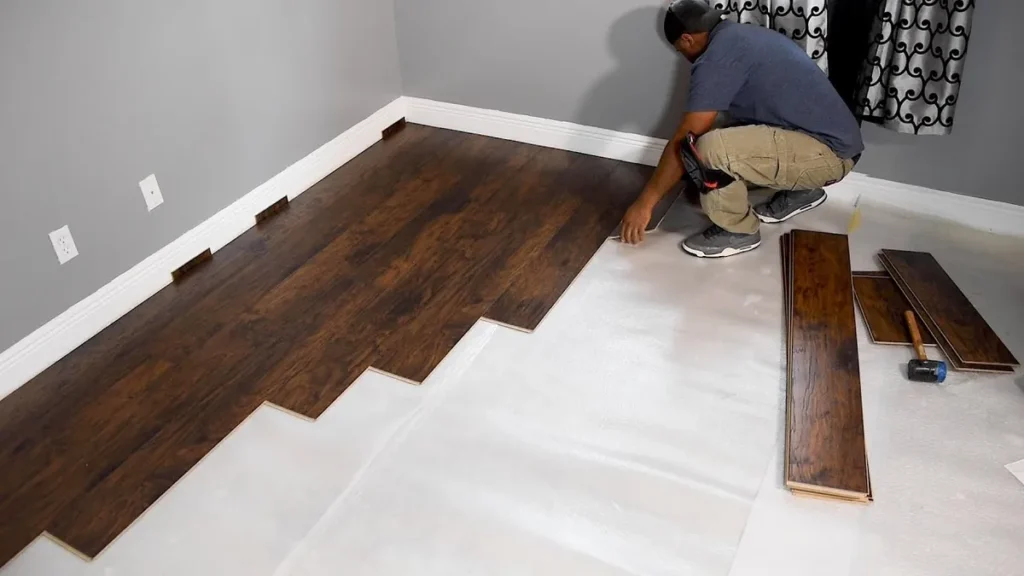
Lay, trim and seal the edges

Planks racked so seams stagger properly, cuts fitted around cabinet kicks and door casings, transitions set, and wet areas detailed at the perimeter where water would otherwise find a way under.

What we check before the first plank

Vinyl plank is forgiving about water and unforgiving about everything else. These four checks are where the job is won.

That the floor under it is flat enough

Rigid core plank does not bend into a dip, it bridges it. A hollow under a floating floor becomes a flex point, then a clicking noise, then a failed joint. We measure and price levelling before the job rather than after the complaint.

That waterproof describes the plank, not the room

A waterproof core survives water. Your subfloor, your baseboards and your cabinet kicks may not. In a laundry room or a basement we talk about where a leak drains to and how the floor gets dried, because that is the part the marketing skips.

That your board may reject an attached pad

Many Toronto corporations specify a sound rating for the floor assembly. A pad bonded to the plank is part of that assembly but rarely the whole answer, and boards ask for documentation covering the entire build-up from concrete to surface. We prepare that package before ordering.

That the Ontario Building Code is not the source of your condo sound rule

The Code regulates sound transmission class and apparent sound transmission class between dwelling units. It sets no impact rating at all. Your impact number comes from your corporation's rules, and the board can amend those on thirty days notice to owners.

Vinyl plank is waterproof, laminate is water resistant

The distinction is a material one and it decides which product belongs in a basement.

A laminate plank has a high-density fibreboard core. Fibreboard is wood, compressed, and wood swells when it gets wet. Water-resistant laminate improves the surface and the joint treatment so that a spill wiped up promptly does no harm, and that is a genuine improvement over older laminate. What it does not do is change the core. Water that sits in a seam for a day, or reaches the plank from underneath, swells the fibreboard, and a swollen core does not come back down when it dries.

A vinyl plank core is plastic, with either a mineral or a wood-flour-and-plastic filler in a sealed matrix. It has no fibre pathway to swell along. Leave water on it and it is unchanged.

This is why we do not put laminate in a Toronto basement and we do put vinyl plank there. It is also why the marketing word on the box is worth reading precisely. Water resistant is a description of the surface. Waterproof is a description of the core. They are not two grades of the same claim.

SPC or WPC plank, and where each goes

Both cores are rigid and both are waterproof, so the choice is about how the floor feels and where it is going.

Stone plastic composite uses a mineral filler and comes out dense. Dense means it resists denting under a fridge leg or a piano caster, it stays dimensionally stable when a room gets hot, and it feels firm underfoot with very little give. The cost of that density is that it is harder and colder to stand on, and it transmits more sound into the room unless there is something underneath it.

Wood plastic composite uses a wood-flour-and-plastic blend, which is lighter and has more give. It is quieter, warmer and easier on your feet over a long stretch of standing. It dents more readily under concentrated point loads and moves a little more under heat.

Our usual split: stone plastic composite over a basement slab, in a kitchen, and anywhere with strong direct sun. Wood plastic composite in bedrooms, upper floors and any room where comfort underfoot is the priority. In a condo, the assembly underneath usually matters more than which of the two you picked.

Every vinyl plank job over concrete needs one reading

Every vinyl plank job over concrete comes down to one reading.

The test is ASTM F2170. Probes go into holes drilled in the slab, placed at forty percent of the slab thickness where the concrete can only dry upward, or at twenty percent from each side where it dries both ways. They are left to equilibrate for a minimum of twenty-four hours, and then the relative humidity inside the slab is read. For resilient products the limit generally sits around seventy-five to eighty percent. The calcium chloride alternative, ASTM F1869, puts resilient flooring at three to five pounds per thousand square feet over twenty-four hours. The manufacturer’s own specification overrides both, and it varies by product, so we work to whichever number is tightest.

What the reading buys you is the method. A slab in range supports a glue-down install with its solid feel and tight seams. A slab reading high rules out glue-down, because adhesive is what fails first, and pushes the job toward a floating install with an appropriate membrane. Either way you get a floor. What you avoid is a bonded floor lifting off a slab in a year, which is a full teardown and not a warranty claim anybody will honour.

The shortcut people take here is a handheld meter touched to the surface. That measures the top few millimetres of concrete, which dry first and tell you almost nothing about the water still held deeper in the slab. It is not evidence, and no manufacturer treats it as evidence.

Vinyl plank questions

What is the difference between SPC and WPC?

Both are rigid cores and both are waterproof. Stone plastic composite is the denser of the two, made with a mineral filler, so it is harder underfoot, more resistant to dents from heavy furniture and more dimensionally stable where a floor gets warm, such as a sunroom or a room with large south-facing glass. Wood plastic composite is lighter and softer, which makes it quieter and more comfortable to stand on for long periods. Over a cold basement slab most people prefer the stone plastic core. In a bedroom or a long kitchen where you are on your feet, the softer core has a real argument.

Can I put vinyl plank in a Toronto basement?

Yes, and it is one of the better answers for a basement. The core carries no wood fibre, so it does not swell the way a laminate core does when water reaches it. The condition is the slab. Under the ASTM F2170 in-situ test, resilient flooring generally wants a relative humidity reading no higher than about seventy-five to eighty percent, with the calcium chloride equivalent at three to five pounds per thousand square feet in twenty-four hours. We drill probes, leave them at least twenty-four hours, and read the number before we commit to a method. If the slab reads high, a floating install with the right membrane is usually still available where a glue-down is not.

Does the attached pad count as my condo underlay?

Usually not on its own. Toronto boards ask for documentation of the sound performance of the floor assembly, meaning everything between the structural concrete and the surface you walk on. A pad laminated to the back of a plank is one component of that assembly, and a rating quoted for the plank alone does not describe what your board is regulating. In practice boards want product data sheets, an underlayment specification, sound documentation for the build-up, a contractor liability certificate, a WSIB clearance, a renovation form and an elevator booking. We assemble that package rather than ordering material and hoping.

Will vinyl plank hold up in a kitchen?

It is one of the stronger choices for a Toronto kitchen. Spills sit on the surface rather than soaking into a fibreboard core, it takes dropped pans better than tile does, and it is warmer and quieter underfoot than either tile or laminate. Two details decide how well it lasts. First, flatness under the cabinets and across an island footing, because a rigid plank bridging a dip flexes at the joint. Second, the perimeter detail at the dishwasher and the sink base, where a slow leak can travel under a floating floor for weeks before anyone notices it.

Price vinyl plank for the room you have

Tell us the room, the substrate and whether there is a condo board involved. We will come and read the floor.

Back to top