Written quote within one business day, across Toronto and the GTA
From $25 per tread Priced per step, not per sq ft 13 to 14 steps in a typical flight Toronto and the GTA

Stair refinishing in Toronto

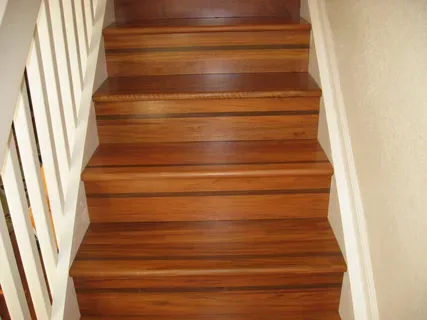
Stairs are handwork, so Toronto Flooring Co prices them per step on a scope ladder that runs from sanding treads only to rebuilding a whole flight, and we tell you which rung your quote sits on.

Every quote states whether risers, stringers and the skirt are in scope
Hand sanding and edge work on treads a drum sander cannot reach
One sealer coat and two topcoats, the Toronto standard
A cure schedule you can plan a household around

Price your staircase

Number of steps, whether the treads are carpeted now, and what you want the risers to look like.

What can we help with?

So the right crew reviews your project.

Any workmanship warranty is set out in your written quote, job by job.

Why stairs price differently

What makes a staircase different from a floor?

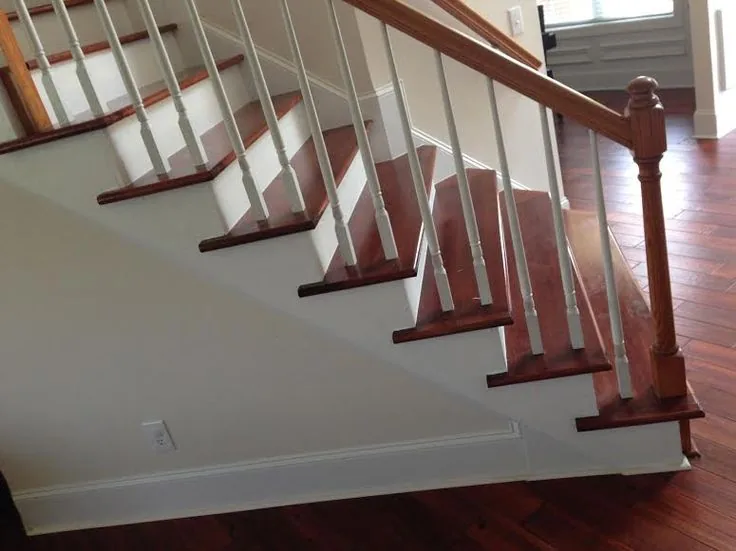
A floor is a flat plane a machine can cross. A staircase is thirteen or fourteen small planes at right angles to each other, each with a nosing that has to be sanded by hand, an inside corner a belt cannot reach, and a riser face that meets the tread in a joint you can see from the bottom of the flight. There is no machine pass that does any of it. That is why stairs are quoted per step and never rolled into the square-foot rate for the floor they connect, and why a contractor who quotes your whole upstairs and mentions the stairs as an afterthought has probably not priced them at all. The other consequence is time. You cannot close a staircase the way you close a room, so the finish schedule has to be planned around the household using the flight.
What refinishing a flight involves

A count, not an area

We count steps, landings and winders, then check whether the treads are solid wood thick enough to sand again. A typical Toronto flight is 13 to 14 steps. Winders at a turn take longer per step than straight treads, and we say which ones you have.

Hand work at every nosing

The bullnose on the front of each tread is the part that wears and the part no machine can touch. It is sanded by hand, the inside corners are scraped, and the riser faces are cut in separately. This is where the hours in a stair quote go.

Sealer plus two topcoats

Three coats, one sealer and two topcoats, is the Toronto standard on floors and it is what a stair tread needs more than a floor does. A stair takes concentrated load on a narrow strip of wood, so the coat that saves money is the coat that wears through first.

The stair refinishing scope ladder

Toronto ranges collected September 2026. Published Toronto figures for stairs disagree widely, and the reason is that they describe different scopes rather than different contractors. Read down the ladder and find yours.

Treads sanded and coated

$25-$50 / step

  • Existing treads only, risers left as they are
  • Sand, hand-work the nosings, seal and topcoat
  • 13 to 14 steps in a typical flight
  • Staining rather than clear coating adds about $100 to the job
Price treads only

Whole staircase

From $3,500

  • Treads, risers, stringers and the skirt board
  • The full flight finished as one piece of joinery
  • Recapping over an existing carcass from $4,900
  • Recapping with a full railing from $5,500
Ask for the full scope
Our Process

How a stair refinish runs

1

Count and probe

Steps counted, winders noted, tread thickness checked where it meets the nosing. A tread already sanded thin is a replacement conversation, not a refinish one, and we would rather have it at the quote.

2

Strip and sand

Old coating taken off, treads sanded flat, nosings and inside corners done by hand, riser faces cut in. Dust containment set up at the top and bottom of the flight because a staircase connects two floors of your house.

3

Seal, then coat

One sealer coat, then two topcoats, with the manufacturer's recoat window respected between them. Where you want a stain colour it goes on before the sealer and adds roughly $100 to the job.

4

Cure and hand back

Treads coated in a sequence that keeps a route open where the layout allows it, then a walkthrough. The cure time on your product goes on the quote in writing, not the dry-to-touch time.

What we check on the flight

Four things decide whether your staircase can be refinished at all, and we look at all four before quoting.

Whether there is wood left to sand

A solid tread can be sanded several times over its life, and a tread that has already been through that cycle twice may not have material left above the nosing profile. We check at the front edge, where the wear is. If the answer is no, we say so and price new treads instead of selling you a sand that goes through.

What is under the carpet

Carpeted stairs in Toronto hide two different things. Sometimes it is finished hardwood that was covered in the 1970s and comes back beautifully. Sometimes it is construction-grade stringer stock never meant to be seen, full of staple holes and painted at the edges. We lift a corner before quoting rather than after.

Whether the geometry is being changed

Sanding and coating existing treads leaves the rise and run alone. Adding material to tread tops does not. The Ontario Building Code sets tolerances on how much risers may vary within a flight, so any work that changes tread height has to be carried consistently down the whole staircase. We flag it at the quote stage, because it changes the scope rung you are on.

How the household gets upstairs

A floor can be closed off. A staircase usually cannot. We plan the coating sequence around the route your household needs, and where the layout gives us no options we tell you which hours the flight is out of service before the work starts rather than on the morning it happens.

What does the price per stair buy?

A stair price only means something once you know what one step includes.

The lowest published Toronto figure, $25 to $50 per step, buys sanding and coating the tread you already have. The risers stay whatever they are. At roughly $100 to $130 per tread the scope includes real wood riser faces, which is a material cost and a joinery cost rather than a finishing one. From $3,500 buys the whole staircase as a unit: treads, risers, stringers and the skirt board that runs up the wall. Recapping an existing carcass starts around $4,900, and recapping with a full railing starts around $5,500.

Multiply the per-step numbers by your real step count before comparing them to a flight price. Thirteen treads at $40 is $520. The same thirteen treads at $115 with wood risers is about $1,500. Neither of those is the $3,500 job, and none of the three is wrong. They are rungs, and a quote is only comparable to another quote on the same rung.

This is also why stairs never belong inside the square-foot rate for a floor. Floor refinishing in Toronto runs $3.50 to $9 per square foot for a sand and three coats, and that rate assumes a machine crossing an open plane. A staircase has no open plane in it.

Why does one stair tread take so long?

The work is slow in a way that is worth picturing, because it explains the price better than any list.

A drum sander flattens a floor in passes. On a staircase there is nowhere to run it. Each tread is sanded with a small machine or by hand, then the bullnose at the front is worked by hand because it is a curve and the machine is flat. The inside corner where the tread meets the riser behind it is scraped, because no abrasive disc fits into a right angle. Then the riser face is cut in separately, and the vertical surface has to be kept clean against the horizontal one or the line reads crooked from the bottom of the flight.

Dust is the other difference. A staircase is the open connection between two floors of your house, so containment goes at the top and the bottom rather than at one doorway. A floor job can be sealed into one room. A stair job cannot.

Can you use the stairs during refinishing?

Plan the household around the flight before the work starts, not during it.

Three coats means three windows during which the treads should not be walked on, plus a cure period after the last one. Where a house has a second staircase or a walk-out we sequence around it easily. In a downtown semi with one flight, we discuss which hours the stairs are out of service and often work backwards from when the household leaves in the morning.

Two practical points that come up every time. Pets have to be considered the same way people are, and a dog that hears the door and runs the stairs will leave prints in a fresh coat. And the flight fills with dust-free air only after containment comes down, so the day the stairs are usable and the day the house feels normal are not the same day. We put both dates on the schedule.

Stair refinishing questions

Why do Toronto stair quotes vary so much?

Because they are quoting different work under the same word. Toronto sources put sanding and coating existing treads at $25 to $50 per step, treads finished together with real wood risers at roughly $100 to $130 per tread, and a whole staircase including stringers and skirt board from $3,500. Those are not three opinions about one job, they are three different jobs. Before comparing two quotes, check whether the risers are in, whether the stringers and skirt are in, and whether the number is per step or for the flight.

How many steps are in a typical staircase?

Thirteen to fourteen in a typical Toronto flight between two floors, which is the number to multiply a per-step price by when you are estimating. Count yours before you call, including the top step if it is a separate tread rather than part of the landing. Winder treads at a turn are wider at one end and take longer than a straight tread, so a flight with a turn in it prices above a straight run of the same step count.

Can you refinish the treads and paint the risers?

Yes, and it is the most common request we get. Stained or clear-coated treads against painted risers is a normal Toronto look and it sits at the lower end of the scope ladder, because painted board risers cost less than real wood riser faces. The joint between the two is what decides whether it looks right, so the tread is finished first, the riser is cut in against it, and the line is kept straight down the flight.

How long is the staircase out of use?

Long enough that it needs planning, and the honest number depends on the coating rather than the wood. Each coat has a recoat window and a cure time set by the manufacturer, and a stair tread takes concentrated load on a narrow strip, so walking on it early does more damage than walking on a floor early. Where the layout allows we coat in a sequence that keeps a route open. Where it does not, we give you the out-of-service hours in writing before the job starts.

Price your flight step by step

Tell us the step count and what you want the risers to look like, and we will tell you which rung of the ladder your job is on before anyone visits.

Back to top