Squeaky above, but the movement is below
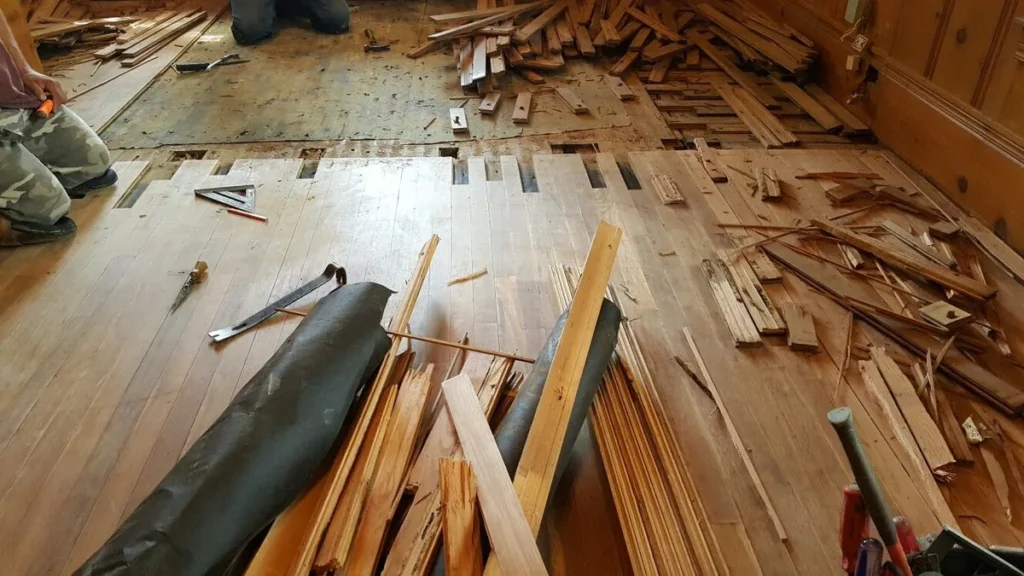
A squeak is friction between a nail shank and the wood it passes through. In a Toronto house built before the war, the layer doing the moving is almost never the hardwood you can see. It is the solid board subfloor beneath it, which has shrunk across the grain over a century, worked its nails loose, and now flexes a few thousandths of an inch every time somebody steps on it. Industry guidance for wood flooring says board subfloors in older homes should be no wider than 6 inches and installed at 45 degrees to the joists, and that any board which moves has to be refastened to the joists before new flooring goes over it. Wide boards move more than narrow ones, which is why the widest boards squeak first. Driving a screw down through the finish floor pins the top layer to a subfloor board that is still loose. The noise stops for a few weeks, the board keeps moving, and by the next heating season you have a squeak and a filled screw hole.